
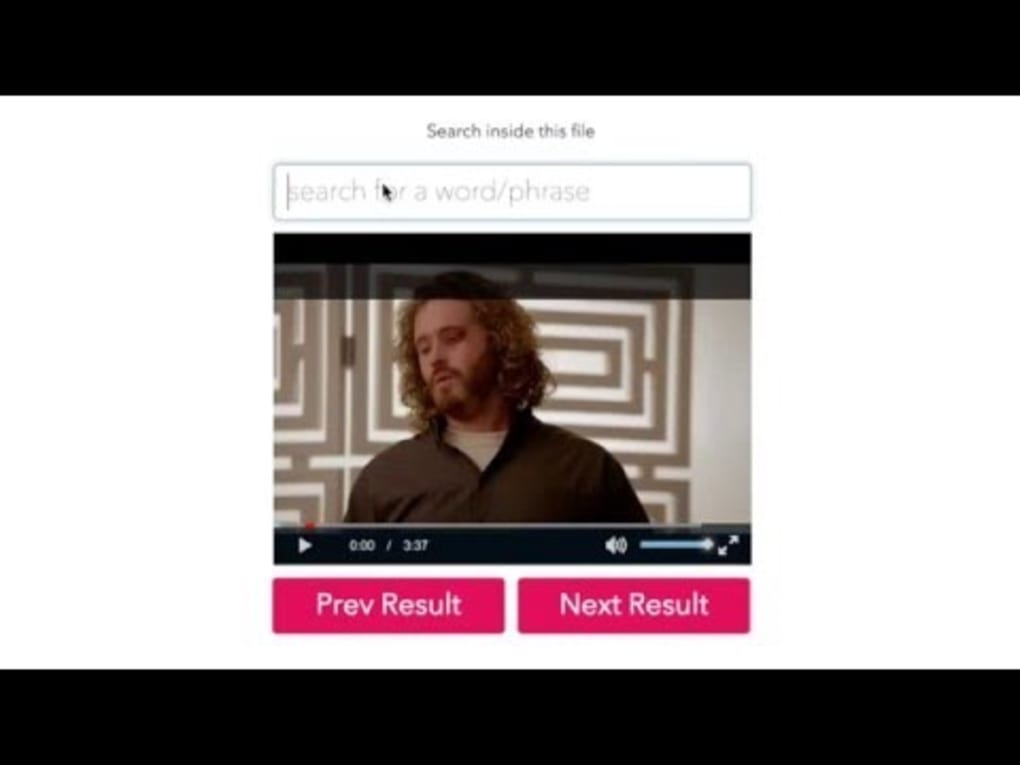

Download DeepGram – AI Audio & Video Transcription Tool
Overview
DeepGram is a next‑generation software bundle that empowers businesses, call centers, and media professionals to extract meaningful insights from audio and video streams in real time. Built on a proprietary artificial‑intelligence engine, DeepGram automatically detects keywords, sentiment, and speaker turns, then presents the findings in a clean, searchable dashboard. The platform eliminates the need for manual transcription or costly in‑house linguistic teams, allowing users to focus on strategic decisions rather than data wrangling. Registration is completely free, and the service continuously refines its models to improve accuracy, speed, and security. Whether you need to monitor customer support calls for recurring issues, generate searchable subtitles for a video library, or analyse market‑research interviews, DeepGram offers a secure, scalable, and cost‑effective solution that fits directly into existing workflows.
Key Features & Capabilities
- Instant Transcription: One‑click conversion of any audio or video file into searchable, timestamped text.
- Keyword Extraction & Highlighting: AI‑driven detection of high‑value terms, phrases, and entities with optional visual highlights.
- Sentiment & Emotion Analysis: Automatic scoring of customer mood, allowing rapid identification of pain points.
- Speaker Diarization: Distinguishes multiple speakers in a recording and attributes each utterance correctly.
- Custom Vocabulary: Upload domain‑specific terminology to boost recognition accuracy for technical or brand‑specific language.
- API Access: RESTful endpoints let developers embed transcription and analytics directly into proprietary applications.
- Real‑Time Streaming Support: Process live audio streams for call‑center monitoring, broadcast captioning, or IoT devices.
- Secure Cloud Storage: Encrypted data at rest and in transit, compliant with GDPR, HIPAA, and SOC‑2 standards.
- Scalable Pricing Model: Free tier for up to 500 minutes per month, with transparent pay‑as‑you‑go options for larger volumes.
- Multi‑Language Support: Transcription capabilities for over 30 languages, with automatic language detection.
Installation, Setup & Usage Guide
Getting started with DeepGram is intentionally frictionless. After navigating to the official website, click the “Sign Up Free” button and fill out the short registration form—name, email, and a secure password. An activation link is sent to your inbox; once confirmed, you are redirected to the dashboard where the first‑time user tour begins.
Step 1 – Create an API Key. From the dashboard, open the “API Settings” tab and generate a new key. This token is required for all programmatic calls and should be stored securely in your environment variables (e.g., DEEPGRAM_API_KEY).
Step 2 – Upload Media. Drag and drop any supported file format (MP3, WAV, MP4, MOV, etc.) onto the upload area or use the “Import from URL” option for cloud‑hosted content. DeepGram immediately begins processing; you can monitor progress in the “Jobs” pane.
Step 3 – Review Results. Once the job completes, the transcription appears with timestamps, speaker labels, and highlighted keywords. Use the built‑in filters to narrow results by sentiment, confidence score, or specific terms. Export options include plain text, JSON, or SRT subtitle files.
Step 4 – Integrate via API. For developers, the API documentation provides example cURL commands and SDKs for Python, Node.js, and Java. A typical request includes the media URL, language hint, and optional features (e.g., punctuate=true, diarize=true). Responses are returned in a structured JSON object that can be parsed and fed into downstream analytics pipelines.
Step 5 – Optimize Accuracy. Leverage the “Custom Vocabulary” feature to upload industry‑specific jargon, acronyms, or brand names. The system will prioritize these terms during transcription, dramatically reducing error rates for niche use cases.
The entire workflow—from registration to final export—typically takes under five minutes for files under one hour, making DeepGram an efficient choice for fast‑moving teams that need reliable, high‑quality transcription without extensive IT overhead.
Compatibility, Pros & Cons, and Frequently Asked Questions
Supported Platforms
DeepGram is a cloud‑native service, which means it works on any operating system that can make HTTPS requests. Official SDKs are available for Windows, macOS, Linux, Android, and iOS. The web dashboard runs flawlessly in modern browsers such as Chrome, Firefox, Edge, and Safari, so no local installation is required.
Pros
- Free tier offers generous monthly minutes, perfect for startups and small teams.
- High accuracy thanks to continuously trained deep‑learning models.
- Real‑time streaming transcription enables live captioning and monitoring.
- Robust security and compliance make it suitable for regulated industries.
- Extensive API and SDK support accelerate integration into existing workflows.
Cons
- Large‑scale deployments may require a paid plan, which can become costly for very high volumes.
- While the web UI is intuitive, power users may find limited customization options for the visual dashboard.
- Audio quality heavily influences accuracy; noisy recordings still need pre‑processing.
Frequently Asked Questions
Is DeepGram really free to use?
Yes. DeepGram provides a free tier that includes up to 500 minutes of transcription per month. This is ideal for testing, small projects, or startups. Additional minutes are billed on a pay‑as‑you‑go basis.
Can DeepGram handle live call‑center streams?
Absolutely. The platform supports real‑time streaming via WebSocket or RTMP endpoints, delivering transcription and sentiment analysis with sub‑second latency. This makes it perfect for monitoring live customer interactions.
What languages are supported?
DeepGram currently supports over 30 languages, including English, Spanish, French, German, Mandarin, and Japanese. Automatic language detection is also available, allowing mixed‑language recordings to be processed without manual selection.
How secure is my data?
All data is encrypted in transit (TLS 1.2+) and at rest (AES‑256). DeepGram complies with GDPR, HIPAA, and SOC‑2, providing audit logs and role‑based access controls for enterprise environments.
Do I need any special hardware to use DeepGram?
No dedicated hardware is required. Since the heavy lifting occurs in DeepGram’s cloud, any device capable of making HTTPS requests—desktop, laptop, tablet, or smartphone—can submit audio for processing.
Conclusion & Call to Action
DeepGram stands out as a powerful, secure, and remarkably easy‑to‑use AI transcription platform that bridges the gap between raw media files and actionable business intelligence. Its free tier lowers the barrier for experimentation, while the robust API, real‑time streaming, and multilingual capabilities make it a future‑proof choice for growing enterprises. If you’re looking to automate call‑center analytics, generate subtitles for video content, or simply gain deeper insight from audio recordings, DeepGram delivers a reliable, cost‑effective solution.
Ready to transform your audio and video data into searchable knowledge? Register for a free DeepGram account today, generate your API key, and start exploring the full suite of transcription and analytics tools. Experience the speed, accuracy, and security that only a purpose‑built AI engine can provide.
Overall Rating: 4.5/5
Pros: Free tier, high accuracy, real‑time streaming, strong security.
Cons: Cost can increase for massive volumes, limited UI customization.



.png)